Private Event Venues for Corporate Groups
Table of Contents
- What Makes Private Event Venues for Corporate Groups Different
- 7 Types of Private Event Venues for Corporate Groups
- 1. Hotel Ballrooms and Conference Centers
- 2. Craft Taprooms and Experiential Hospitality Spaces
- 3. Rooftop and Outdoor Event Spaces
- 4. Dedicated Conference and Meeting Facilities
- 5. Multi-Purpose Event Spaces and Lofts
- 6. Restaurants with Private Dining Rooms
- 7. Unique Branded Venues and Cultural Spaces
- Corporate Event Venue Checklist: Amenities That Actually Matter
- Questions to Ask Event Venues Before You Sign Anything
- Budgeting for Venue Rental: What Drives the Cost
- Corporate Event Planning Best Practices for Group Bookings
- Conclusion
Last Updated: August 5, 2026
Choosing the right private event venues for corporate groups is one of the most consequential decisions an event planner makes. This guide from NoFo Brew Co covers venue types, amenity checklists, contract considerations, and ROI metrics that most directory-style resources skip entirely. Below, we’ll show you exactly how to evaluate, compare, and book a space that serves your group’s objectives, whether you’re hosting 20 executives or 200 employees.
The venue actively shapes attendee behavior, conversation quality, and how people feel about the company afterward.
What Makes Private Event Venues for Corporate Groups Different
A corporate private venue is a dedicated, bookable space that provides exclusive use, controlled access, and infrastructure to support professional programming, from breakout sessions to formal presentations to team-building activities.
Corporate planners need reliable audio-visual equipment, configurable seating, catering services that accommodate dietary restrictions at scale, and staff who understand event logistics. A venue that excels at wedding receptions may completely miss the mark for a leadership offsite.
Off-Site vs. On-Site: Why Location Changes Everything
Off-site corporate events consistently outperform on-site meetings because they break habitual thinking. When attendees leave the office environment, they stop defaulting to office-mode behavior. The physical change signals psychological permission to think differently, which is exactly what most corporate gatherings are designed to produce.
On-site meetings are cheaper and easier to coordinate, but they come with a ceiling. For strategic planning sessions, leadership retreats, or culture-building events, the off-site premium is almost always worth it.
7 Types of Private Event Venues for Corporate Groups
Corporate planners have more venue options in 2026 than ever before. Understanding the full menu helps you match the space to the event’s actual objectives rather than defaulting to the familiar.
1. Hotel Ballrooms and Conference Centers
Hotel conference rooms and ballrooms remain the default choice for large corporate gatherings. They offer predictable infrastructure: built-in audio-visual equipment, on-site catering, dedicated event coordination staff, and flexible floor plans that accommodate everything from theater-style presentations to round-table discussions.
The tradeoff is ambiance. Hotel spaces are deliberately neutral, which means they rarely generate the energy or memorable experience that experiential venues can. They work best for formal conferences, multi-day training events, or situations where attendee logistics require full hotel infrastructure.
2. Craft Taprooms and Experiential Hospitality Spaces
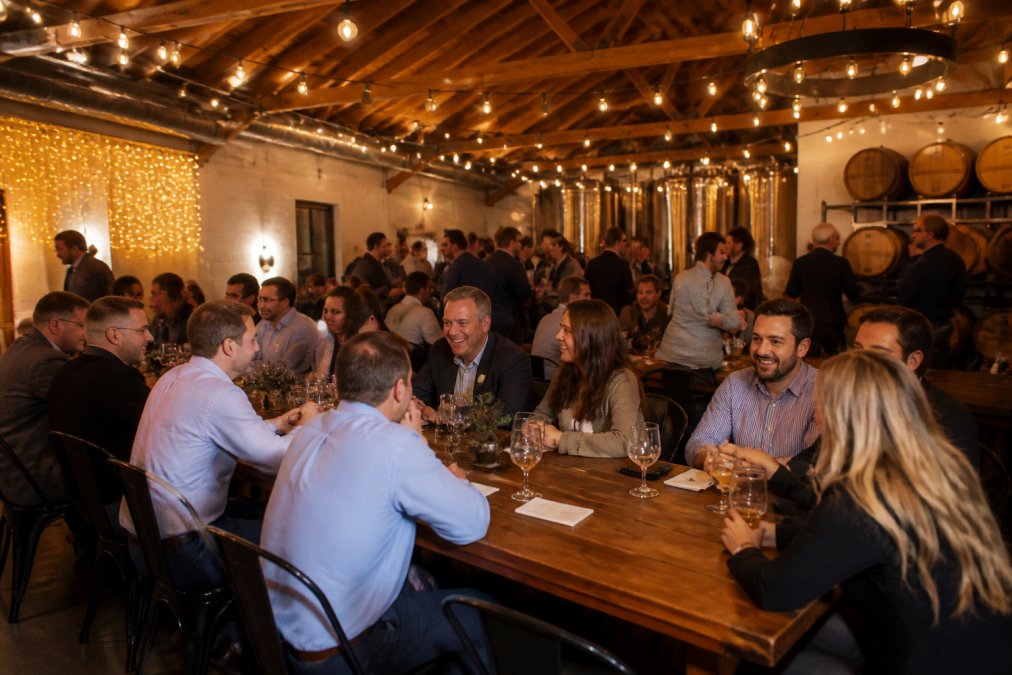
Craft taprooms and experiential hospitality venues offer something hotel ballrooms fundamentally cannot: a sense of place. The atmosphere is built in, and conversation starts the moment guests walk through the door.
NoFo operates three taproom locations across North Georgia, in Cumming, Gainesville, and Cleveland, each designed as a community gathering space from the ground up. From the beginning, NoFo has been about creating a welcoming “third place” where people can gather, celebrate, share stories, and build meaningful connections within their community. That philosophy translates directly to corporate groups: the space encourages the kind of informal networking and authentic conversation that a generic conference room actively suppresses.
For corporate happy hours, team-building events, client appreciation nights, or end-of-quarter celebrations, a well-run taproom with private event capabilities offers hospitality, distinctive ambiance, and food and beverage quality that’s hard to replicate in a traditional meeting facility.
3. Rooftop and Outdoor Event Spaces
Outdoor and rooftop venues offer unmatched visual impact and create an informal energy that works well for networking events and social gatherings. The risk is weather dependency and logistical complexity of outdoor audio-visual setups.
Any outdoor corporate event needs a written weather policy in the venue contract, including what triggers a move to an indoor backup and who makes that call.
4. Dedicated Conference and Meeting Facilities
Purpose-built conference facilities offer the highest density of meeting infrastructure per square foot: tiered seating, integrated presentation systems, breakout rooms, and event technology that hotels often approximate but rarely match.
They’re the right call for events where content is the priority, full-day training sessions, board meetings, or certification courses.
5. Multi-Purpose Event Spaces and Lofts
Converted warehouse spaces, art galleries, and multi-purpose lofts offer flexibility without the sterility of a conference center. The open floor plans accommodate almost any seating arrangement, and the industrial aesthetic photographs well.
With loft spaces, vendor management becomes your responsibility. Unlike hotels or dedicated event venues, multi-purpose spaces often require you to source and coordinate every vendor independently. Budget extra time for logistics coordination.
6. Restaurants with Private Dining Rooms
Private dining rooms inside established restaurants are an underutilized option for smaller corporate groups, typically 10 to 40 attendees. The catering question is solved by default, the service quality is usually high, and the intimate setting encourages genuine conversation.
The capacity ceiling is the main constraint. For groups larger than 50, most restaurant private dining rooms don’t work. For executive dinners, client entertainment, or small team celebrations, they’re often the most efficient choice available.
7. Unique Branded Venues and Cultural Spaces
Museums, historic buildings, sports facilities, and branded entertainment venues work best when the venue itself reinforces the event’s message or theme. A company celebrating an innovation milestone at a science museum creates a coherent narrative. A sales team kickoff at a sports venue taps into competitive energy.
According to Eventbrite’s corporate event trends research, attendees consistently rate unique and unexpected venues as a top driver of event satisfaction.
Corporate Event Venue Checklist: Amenities That Actually Matter
Not every amenity listed in a venue brochure moves the needle for corporate groups. This checklist below focuses on what experienced planners verify during site inspections.
|
Amenity |
Why It Matters |
What to Verify |
|---|---|---|
|
Audio-visual equipment |
Drives presentation quality |
Resolution, backup systems, tech support |
|
Dedicated event coordinator |
Reduces day-of chaos |
Coordinator’s role vs. sales contact |
|
Catering flexibility |
Accommodates dietary needs |
In-house vs. approved vendor list |
|
Parking and transit access |
Affects attendance rate |
Spaces per attendee, valet options |
|
Accessibility compliance |
Legal and ethical requirement |
ADA compliance, elevator access |
|
Wi-Fi capacity |
Critical for hybrid events |
Bandwidth under load, dedicated lines |
|
Breakout space availability |
Supports session variety |
Number of rooms, acoustic separation |
|
Climate control |
Affects focus and comfort |
Zone control, noise from HVAC |
Audio-Visual Equipment and Hybrid Event Infrastructure
Audio-visual capability is the single most common point of failure at corporate events. A venue’s brochure may list “full AV support,” but that covers everything from a single projector to a professional broadcast-quality setup.
Hybrid event infrastructure deserves specific attention in 2026. As documented in Harvard Business Review’s analysis of hybrid workplace trends, hybrid work arrangements have become standard across most professional sectors, which means corporate events increasingly need to serve both in-person and remote attendees simultaneously. That requires more than a laptop pointed at a screen. Look for venues with dedicated streaming infrastructure, quality microphone arrays, and technical staff who have actually run hybrid events before.
Key questions: Is the AV equipment owned by the venue or rented per event? Who provides technical support during the event, and what’s their response time? What’s the backup plan if the primary system fails? Can the space support simultaneous breakout sessions with separate audio feeds?
Catering Services, Food Options, and Beverage Packages
Catering is where corporate events most visibly succeed or fail from an attendee perspective. A strong presentation followed by mediocre food leaves a lasting negative impression.
The two models you’ll encounter are in-house catering and approved vendor lists. In-house catering offers convenience and accountability. Approved vendor lists give you more choice but add coordination complexity.
For beverage programs specifically, craft beverage options have become a meaningful differentiator. Groups that have experienced the difference between a generic open bar and a curated craft beer and spirits selection notice it immediately.
Accessibility, Parking, and Logistics
Accessibility compliance isn’t optional. Under the Americans with Disabilities Act, event venues are subject to specific standards. The ADA National Network’s guidance on event accessibility provides a practical framework for what to verify during site inspections.
Practical logistics determine whether attendees actually show up in a good state of mind. Parking availability, proximity to transit, clear wayfinding, and load-in access for vendors all affect the attendee experience before the event begins.
Questions to Ask Event Venues Before You Sign Anything
Once you’re emotionally committed to a space, your negotiating position weakens. Ask these questions before you reach that point:
- What is the minimum rental period, and what does it include?
- What is the venue’s policy on outside vendors for catering, AV, and décor?
- What events are scheduled in adjacent spaces on the same day?
- What is the noise ordinance or sound restriction policy?
- What is the cancellation and rescheduling policy, including force majeure provisions?
- Who is the day-of contact, and what is their authority to resolve issues?
- What is the venue’s liability insurance coverage, and what does it require from the client?
Contractual and Liability Considerations
Corporate event contracts deserve the same scrutiny as any significant business agreement. A common mistake is treating the venue contract as a formality rather than a risk management document.
Key clauses to review carefully include the force majeure language, the indemnification provisions, the minimum spend requirements, and the attrition clauses if you’re booking a block of hotel rooms alongside the event space. Many venues include automatic renewal provisions or deposit forfeiture terms that aren’t obvious on first reading.
If your event involves alcohol service, verify the venue’s liquor liability coverage and whether your organization needs a separate event insurance policy. Confirm this requirement internally before you start venue negotiations, not after you’ve found the perfect space.
Budgeting for Venue Rental: What Drives the Cost
Venue rental pricing for corporate groups varies significantly based on factors that aren’t always obvious from a venue’s initial quote. The primary cost variables are: day of week and time of year, minimum food and beverage spend requirements, AV and technical services, staffing and event coordination fees, and any exclusivity premiums for sole use of the space.
Request an itemized quote that separates the venue fee from every additional service. Then compare total all-in costs across venues, not just the headline rental number.
Corporate Event Planning Best Practices for Group Bookings
Experienced corporate planners approach venue selection as a strategic decision, not a logistics task.
Start with event objectives, not venue features. A team-building event, a client appreciation dinner, and an annual sales kickoff have fundamentally different success criteria. Document your objectives before you open a single venue website.
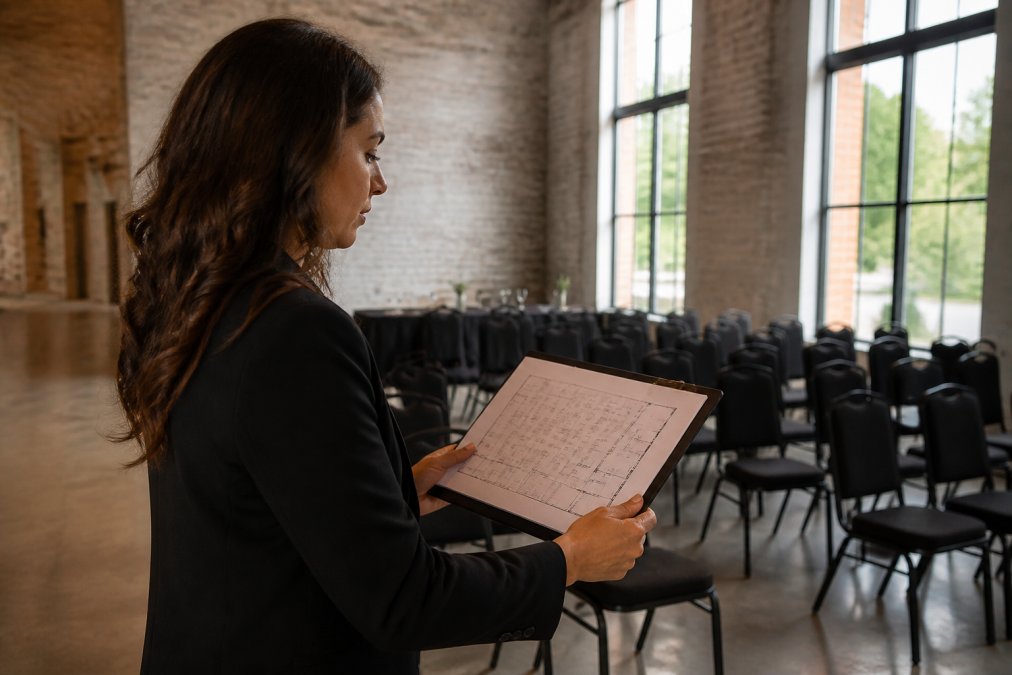
Build your site inspection checklist before you visit. Walking through a space without a structured evaluation framework means you’ll be influenced by aesthetics and miss operational details.
Timeline matters more than most planners acknowledge. For groups of 50 or more, booking 4 to 6 months in advance is a practical minimum for preferred venues.
ROI and Event Success Metrics Worth Tracking
Most corporate events are evaluated on attendance and immediate feedback. Groups that track meaningful ROI metrics get better at event planning over time. Metrics worth tracking include: attendee satisfaction scores collected within 24 hours, net promoter score for the event itself, specific behavioral outcomes tied to event objectives, and cost per attendee against benchmark for similar events.
The connection between event quality and business outcomes is real but indirect. A well-executed corporate event builds the kind of trust and relational capital that shows up in retention numbers and collaboration quality months later.
Sustainability and Green Event Practices
Corporate sustainability commitments increasingly extend to event planning. A venue’s sustainability profile covers energy sourcing, waste management, single-use plastics policy, and local sourcing for food and beverage programs.
Practical steps for greener corporate events include: choosing venues with documented sustainability certifications, requiring caterers to provide waste diversion data, selecting venues accessible by public transit, and prioritizing local vendors. The U.S. Environmental Protection Agency’s sustainable event planning resources offers a practical framework for organizations building formal green event policies.
Finding the right private event space for a corporate group requires balancing ambiance, logistics, technical capability, and budget. NoFo Brew Co’s taproom locations in Cumming, Gainesville, and Cleveland, Georgia offer private event capabilities in community-focused spaces built for exactly this kind of gathering, with craft beverage programs, flexible layouts, and an atmosphere that generates the kind of authentic connection most corporate events are designed to create. Reach out to the NoFo Brew Co team to discuss your group’s needs and get started planning an event worth attending.
Frequently Asked Questions
What should I look for when booking a corporate event venue?
Start with capacity relative to your group size, then confirm audio-visual equipment, catering services, and parking availability. Check the floor plan to see whether breakout sessions are possible, and verify that the venue has handled corporate gatherings before. Accessibility under the Americans with Disabilities Act matters too. Finally, review the contract carefully for cancellation terms, liability clauses, and any vendor management restrictions before committing.
How far in advance should you book a private event space for a corporate group?
For groups of 50 or more, booking three to six months out is a reliable rule of thumb, especially for Friday and Saturday dates. Smaller off-site meetings for teams of 20 or fewer can often be secured four to six weeks ahead. Popular venues in metro areas fill up faster during Q4 conference season. The earlier you complete a site inspection and confirm your event objectives, the more negotiating room you have on pricing and seating arrangements.
What amenities are essential for corporate group events?
Reliable high-speed Wi-Fi, a projector or display screen, and a microphone system are the baseline for most corporate gatherings. Catering services or approved outside vendor access, accessible restrooms, and on-site event coordination support round out the essentials. For hybrid events, you also need a stable video-conferencing setup with good acoustics. Breakout session rooms, dedicated parking, and a clear floor plan for seating arrangements become critical as group size grows.
What questions should I ask a corporate event venue before signing a contract?
Ask about the venue's maximum capacity, what audio-visual equipment is included versus rented separately, and whether in-house catering is required or if outside vendors are allowed. Confirm the booking process, deposit structure, and cancellation policy. Ask who handles on-site event coordination the day of your event, whether the space is ADA-compliant, and what the venue's liability insurance requirements are. Getting clear answers to these questions prevents most of the surprises that derail corporate event planning.
How do you measure the success of a corporate event?
Define your event objectives before booking, then measure against them. Attendance rate versus RSVP count is a basic starting point. Post-event surveys measuring attendee experience, net promoter scores from participants, and documented leads or deals influenced by networking all serve as ROI indicators. For team building events, follow-up engagement scores or project collaboration metrics tracked 30 to 60 days later give a more complete picture of whether the event delivered real value.
Can a craft taproom work as a private event venue for corporate groups?
Yes, and they are increasingly popular for corporate happy hours, team building events, and off-site meetings where atmosphere matters. Taprooms with dedicated private event spaces offer a distinctive ambiance that hotel conference rooms cannot match. The best ones provide customizable seating arrangements, on-site catering or food truck partnerships, and full audio-visual support. Venues like NoFo Brew Co in North Georgia are purpose-built for this, offering customizable private event spaces across multiple locations for groups of varying sizes.