Why Community Matters to NoFo Brew Co: A Third Place Guide
Table of Contents
- The Third Place: Why Community Matters to NoFo Brew Co
- How Breweries Foster Social Connection
- Benefits of Third Place Establishments for Local Communities
- NoFo’s Approach to Hospitality and Inclusive Environments
- Building Local Partnerships and Supporting Regional Culture
- Community Impact: From Families to Football Sponsorships
- The Future of Community-Driven Craft Brewing
Last Updated: August 10, 2026
The Third Place: Why Community Matters to NoFo Brew Co
Community isn’t a buzzword at NoFo, it’s the foundation everything is built on. From the beginning, NoFo has been about creating a welcoming “third place” where people can gather, celebrate, share stories, and build meaningful connections within their community. This concept of the third place, distinct from home and work, has become increasingly rare in modern life, yet it remains essential for human connection and social cohesion.
Today’s most successful breweries recognize they’re creating spaces where community thrives, not just selling products. For NoFo, this understanding shaped every decision from day one, from the layout of their taprooms to the events they sponsor to the families and pets they welcome through their doors.
How Breweries Foster Social Connection
Breweries occupy a unique position in the modern social landscape. Unlike traditional bars focused purely on alcohol sales, craft breweries function as social hubs where the product becomes secondary to the experience.
Professional illustration showing community third place brewery
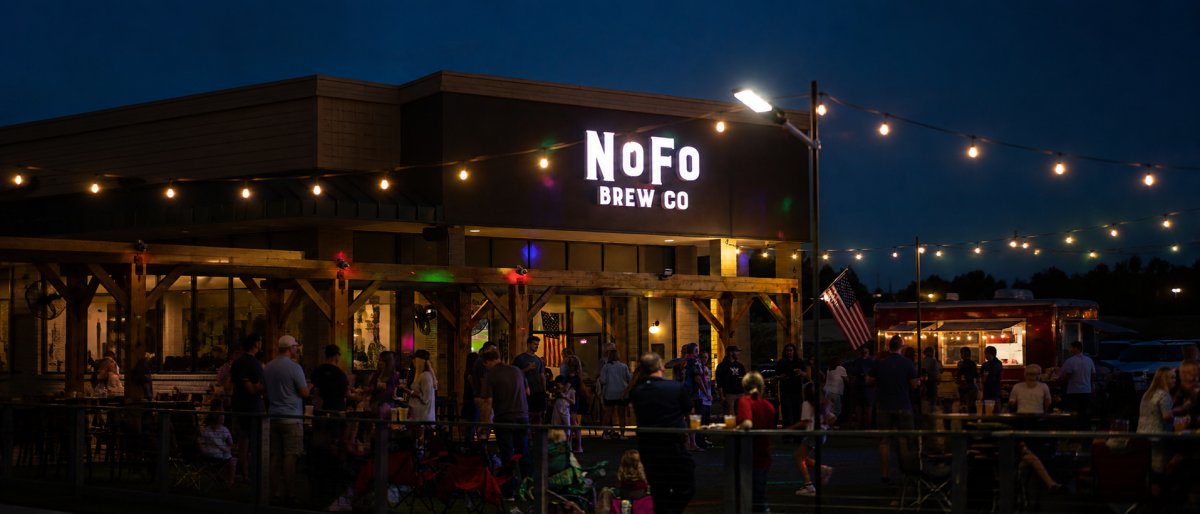
A well-designed taproom removes barriers to interaction. When seating is arranged communally, when bartenders engage customers in conversation about the craft, when events bring people together around shared interests, connection happens naturally. NoFo’s three taproom locations across North Georgia (Cumming, Gainesville, and Cleveland) each reflect this philosophy. The spaces are designed for lingering, not rushing. Customers become regulars. Strangers become friends.
Craft beer itself acts as a social binder. The complexity and variety of craft beverages give people something to discuss and explore together. Someone trying a hazy IPA for the first time becomes part of a conversation with someone who’s been exploring craft beer for years, creating instant common ground.
Food trucks at the Cumming and Cleveland locations, along with the partnership with Vendetti’s (Italian) restaurant in Gainesville, strengthen this social infrastructure. When people can gather, drink quality beverages, eat good food, and spend hours without feeling rushed, the conditions for meaningful connection are established.
The inclusive environment matters equally. NoFo welcomes families during the day and early evening, maintains dog-friendly patios for pet owners in Forsyth, White, and Hall Counties, and creates separate membership lounges for those seeking a more exclusive experience. This tiered approach means different groups find their place within the same community.
Benefits of Third Place Establishments for Local Communities
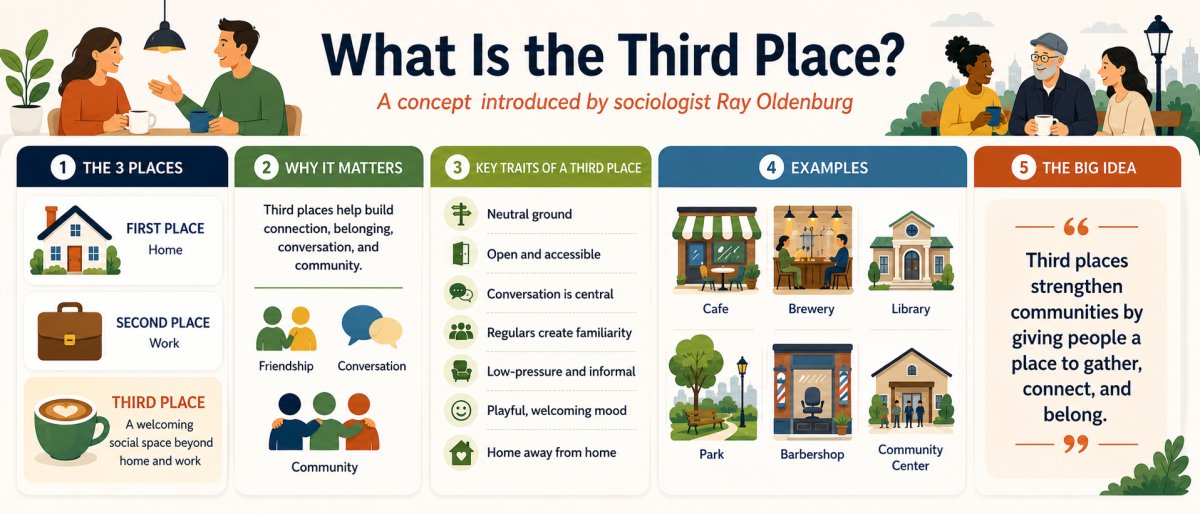
Third places generate measurable benefits that extend far beyond the businesses themselves. When a community has genuine gathering spaces, the entire neighborhood benefits from increased social cohesion and stronger local networks.
The most immediate benefit is the reduction of social isolation. In an era when many people work remotely and spend increasing time online, having a physical space to encounter neighbors becomes critical. A brewery that functions as a third place fills this gap. Regular customers develop genuine friendships. Newcomers to an area find their footing faster.
Local economic impact follows naturally. When a brewery becomes a community hub, it attracts consistent foot traffic that benefits neighboring businesses. The partnership between NoFo and Vendetti’s (Italian) in Gainesville exemplifies this, with two local businesses strengthening each other through proximity and shared customer base.
Third places also serve as incubators for civic engagement. When people feel connected to a space and to each other, they’re more likely to care about their neighborhood’s future. NoFo’s approach to community outreach, from sponsoring local football clubs like Chattanooga FC to hosting events that celebrate local culture, demonstrates how a brewery can amplify these civic benefits.
Mental health benefits, while less quantifiable, are equally important. Loneliness has become a public health concern. Third places provide low-pressure environments where social interaction happens organically, making connection accessible to people who might struggle in more structured social settings.
NoFo’s Approach to Hospitality and Inclusive Environments
Hospitality at NoFo Brew Co goes beyond standard customer service. It reflects a genuine commitment to making people feel welcome, regardless of who they are or what their preferences might be.
The family-friendly approach is particularly notable in an industry sometimes stereotyped as excluding children. NoFo recognized that responsible families wanted social environments where they could spend time together, and the company designed spaces and policies to make that possible.
The dog-friendly policy demonstrates similar thinking. Pet owners in the region now have a gathering space where their companions are genuinely welcome. The specification that aggressive dogs aren’t welcome shows thoughtful boundary-setting that protects the inclusive environment for everyone.
The membership program with exclusive lounge access and early releases serves a different but equally important function. Not everyone wants the same social experience. By offering this tier, NoFo acknowledges that hospitality means meeting people where they are.
What ties these approaches together is consistency. Hospitality standards aren’t negotiable across the three locations. Whether someone visits Cumming, Gainesville, or Cleveland, they encounter the same commitment to making people feel valued.
The leadership transition in 2026, with co-founder Shannon Miles assuming the CEO role, signals continuity in these values. The founders established community as the core conviction, and the company’s evolution reflects deepening commitment to that principle.
Building Local Partnerships and Supporting Regional Culture
A brewery’s community impact multiplies when it actively builds partnerships with local organizations and celebrates regional culture. NoFo demonstrates this through multiple channels.
The sponsorship of Chattanooga FC represents a strategic partnership that extends NoFo’s community footprint beyond its immediate taproom locations. By brewing exclusive labels, 423 Lager and Always a Blue IPA, served at Finley Stadium, NoFo connects craft beverage culture with sports culture and civic pride.
The acquisition of Tantrum Brewing’s assets in Cleveland in 2023 was significant beyond business expansion. This marked the first instance of one independent Georgia craft brewery acquiring another, signaling a collaborative rather than purely competitive approach to the industry.
Local partnerships extend to food and hospitality. The daily food truck operations at Cumming and Cleveland locations provide platforms for local food entrepreneurs. The restaurant partnership with Vendetti’s in Gainesville creates a mutually beneficial relationship where both businesses strengthen each other.
Supporting local culture means hosting events that celebrate what residents care about, whether that’s live music, trivia nights, or seasonal celebrations. These events give people reasons to visit and feel that the brewery understands and values their community’s identity.
The social media presence on TikTok and Instagram at @nofobrewco, along with the YouTube channel, extends this community engagement into digital spaces.
Community Impact
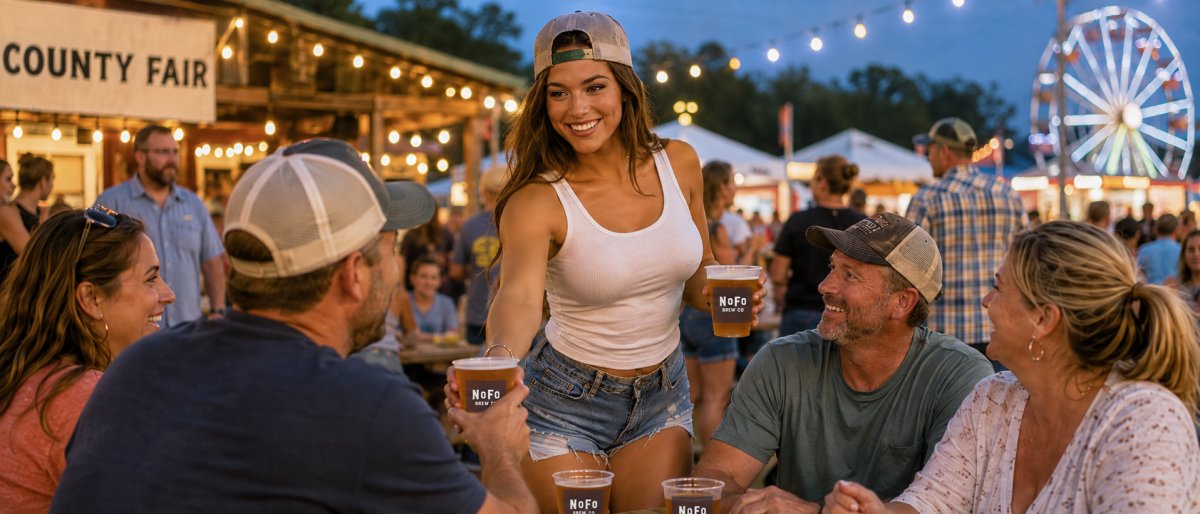
The range of community impact NoFo generates demonstrates how comprehensively a business can weave itself into local life when community is genuinely the priority.
Family impact begins with the simple act of welcome. When a parent can bring their children to a brewery and feel that the space was designed with them in mind, something shifts in how they relate to that business. Families spend money locally and return repeatedly.
Pet owners represent another community segment with specific needs. In Forsyth, White, and Hall Counties, NoFo’s dog-friendly patios create genuine value. Pet owners often have strong loyalty to businesses that respect their companions and form their own social networks around shared interests.
The membership program creates another layer of community impact. Members develop stronger attachment to the brand and become advocates who recruit friends.
Sports sponsorship through Chattanooga FC extends community impact into civic pride and regional identity. The exclusive beer labels become collectible items and conversation starters.
The distribution across Georgia, Florida, and Tennessee means NoFo’s community impact extends beyond taproom locations. Restaurants and retailers carrying NoFo products introduce the brand to new audiences in communities where physical taprooms don’t exist.
Most significantly, the cumulative impact of these efforts is that NoFo becomes woven into the identity of the communities it serves. When people think about North Georgia, NoFo becomes part of that mental map, not as an outsider selling products, but as a neighbor that understands and celebrates local identity.
The Future of Community-Driven Craft Brewing
The craft beverage industry is at an inflection point. As consolidation continues and larger brands compete on distribution and marketing budgets, the sustainable advantage for independent craft breweries is community. Businesses that function as genuine third places will thrive.
NoFo’s trajectory suggests what this future looks like. Three strategically located taprooms create density of presence without losing the curated, intentional feel that makes each location special. The craft distillery operations add depth to the product offering while maintaining focus on quality over volume. The membership program creates a revenue model that rewards customer loyalty and deepens engagement.
The leadership transition to Shannon Miles as CEO represents continuity in the community-first philosophy. The founders established this value, and the company’s evolution demonstrates its staying power through leadership changes.
What’s particularly notable is that NoFo’s approach isn’t a marketing tactic, it’s structural. The company invested in physical spaces designed for community. It created policies that reflect values rather than chasing trends. It built partnerships with local organizations rather than treating them as sponsorship opportunities. These decisions are harder to reverse or fake than a marketing campaign, which means they’re more credible to communities.
The expansion to new locations shows that community-driven growth is scalable. Each new location doesn’t dilute the community focus, it extends it. The acquisition of Tantrum Brewing’s assets demonstrated that growth can happen through collaboration rather than competition.
Looking forward, the craft beverage industry will likely see increasing differentiation between large-scale producers competing on price and distribution, and independent craft producers competing on community and experience. NoFo is positioned well for this future because community isn’t something the company does in addition to making beer and spirits, it’s fundamental to the business model. From the beginning, NoFo has been about creating a welcoming “third place” where people can gather, celebrate, share stories, and build meaningful connections within their community, and that distinction matters enormously for long-term sustainability.
Frequently Asked Questions
What is a 'third place' and why does it matter to NoFo Brew Co?
A third place is a social environment separate from home (first place) and work (second place) where people gather for community connection. From the beginning, NoFo has been about creating a welcoming third place where people can gather, celebrate, share stories, and build meaningful connections within their community. For NoFo, this philosophy guides everything—from taproom design to event programming to inclusive policies for families and pets.
How do breweries foster social connection in their communities?
Craft breweries create social cohesion by offering authentic atmospheres where strangers become regulars and shared experiences build lasting relationships. NoFo fosters connection through daily food trucks, scheduled events, member lounges, and by welcoming families and dogs. The taproom becomes a neighborhood gathering space where people return not just for the beer, but for the people and sense of belonging. This social binder effect strengthens local culture and civic engagement.
Is NoFo actually family-friendly, or is it just a bar?
NoFo is genuinely designed for families. All three taprooms (Cumming, Gainesville, and Cleveland) are family-friendly and dog-friendly, with food trucks operating daily at Cumming and Cleveland locations. The hospitality standards prioritize creating inclusive environments where parents feel welcome bringing children. This commitment to accessibility reflects NoFo's core conviction that community means everyone—not just adults seeking nightlife.
What makes NoFo different from larger craft brewing brands?
NoFo prioritizes authentic community engagement over scale. While larger breweries focus on distribution and brand reach, NoFo invests in meaningful local partnerships, sponsors regional football clubs (Chattanooga FC), operates member-exclusive lounges, and curates each taproom as a genuine social hub. This community-driven approach creates deeper customer satisfaction and stronger neighborhood development ties than volume-focused competitors.